
Five Negative Effects of Not Using Sunscreen (And How to Protect Your Glow)
Posted by Santeva on May 29th 2026
Imagine spending months curating the perfect skincare routine. You have invested in high-quality organic skin brightening serums, prioritized hydration, and finally started to see that flawless complexion. But then, you step outside unprotected. Whether running a fifteen-minute errand or sitting near a bright window, exposing bare skin to the sun quietly undoes all of that hard work in minutes.
Achieving a luminous complexion takes time. For anyone actively battling dark spots, there is one non-negotiable step: daily sun protection. The negative effects of not using sunscreen go far beyond a temporary sunburn. Unprotected exposure is the number one enemy of an even, luminous skin tone. If you have ever wondered, "Does skipping sunscreen cause hyperpigmentation?" the scientifically proven answer is a resounding yes.
Here is exactly what happens on a cellular level when you skip your SPF, how it sabotages your skincare goals, and how you can protect and heal your complexion using nature’s most potent ingredients.
1. Accelerated Hyperpigmentation
To truly understand why the sun darkens your skin, you have to look at the microscopic factories sitting at the base of your epidermis: your melanocytes. Their vital job is protecting your skin's delicate DNA from the destructive impacts of UV radiation.
When sunlight hits unprotected skin, it triggers a massive biological alarm system. In a desperate attempt to shield your fragile skin cells, your melanocytes go into overdrive, pumping out excess melanin. Think of melanin as biological umbrellas opening over your cells to physically block the sun's rays.
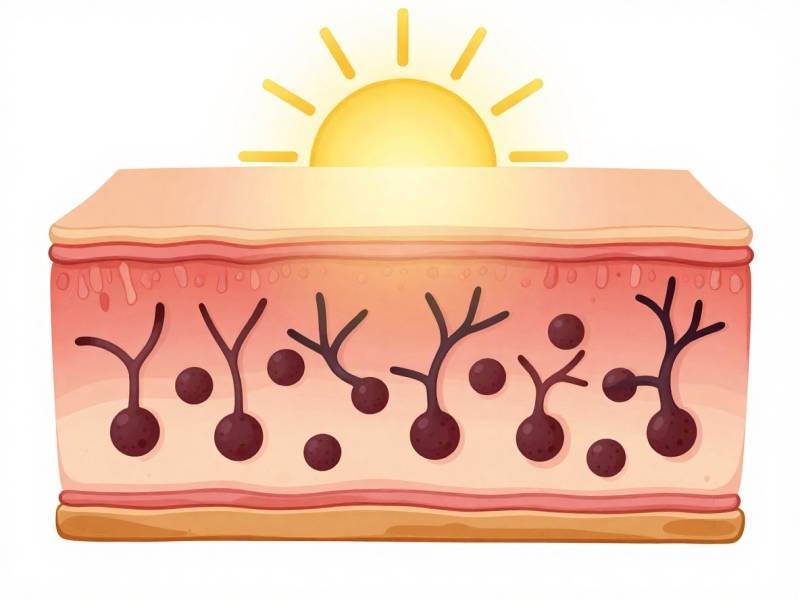
While this is an incredible defense mechanism, this rapid melanin production does not always happen evenly. Instead of a smooth, uniform tan, the excess pigment often clumps together in concentrated pockets. This clustering forms stubborn dark spots, exacerbates melasma, and creates prominent age spots. This is the exact root cause of hyperpigmentation from sun damage.
If you are currently using brightening products to fade existing marks, exposing your skin without a protective shield completely counteracts your progress. Your serums are working overtime to fade the pigment, while the sun simultaneously commands your skin to create more.
2. Uneven Skin Tone
Skipping your daily sunscreen application does not just cause isolated dark spots; it fundamentally disrupts the overall harmony of your complexion. Consistent sun exposure breaks down your skin's natural uniformity, leaving behind a patchy, mottled appearance often referred to as the "patchwork" effect.
The skin on your face is not perfectly flat. The high points—your forehead, the bridge of your nose, your cheekbones, and your chin—naturally catch more light and, consequently, significantly more UV radiation than the contours of your face. Because these raised areas take the absolute brunt of the sun's impact, they darken much faster, leading to a frustratingly uneven skin tone.
This often leads to the exhausting daily struggle of trying to color-match heavy foundations just to create a uniform base. To achieve that seamless, bright look naturally, you need a physical or chemical barrier to prevent pigment disruption. If you are searching for the best organic skincare for uneven tone, the absolute first step is securing a reliable, daily sunscreen. Without it, even the most potent botanical ingredients cannot outpace the sun.
3. Collagen Destruction and Premature Aging
When we talk about the sun, we are dealing with two primary types of ultraviolet rays. While UVB rays are responsible for burning the superficial layers of your skin, UVA rays are the silent, deep-penetrating destroyers.
UVA rays have longer wavelengths, allowing them to completely bypass the surface and dive deep into the dermis. Once there, these rays aggressively attack and break down collagen and elastin. These are the essential, spring-like fibers that keep your skin firm, bouncy, and youthful.
When UVA rays destroy that underlying scaffolding, the outer layers of the skin begin to cave in. This structural destruction leads directly to premature aging. Without a daily sunscreen acting as a barrier, your skin becomes incredibly vulnerable to wrinkles, fine lines, leathery textures, and severe sagging.
A vibrant glow requires a multi-dimensional approach; you need both a bright surface and a firm foundation beneath it. If your collagen is deteriorating from daily, unprotected sun exposure, your skin will lose its vibrant bounce, regardless of how clear and spot-free your complexion might be.
4. Sunburn and Post-Inflammatory Hyperpigmentation
A sunburn is not just a temporary inconvenience that fades after a few days of uncomfortable peeling; it is an acute, aggressive inflammatory response to UVB radiation. When the sun burns your skin, it severely damages the delicate skin barrier, prompting your immune system to rush heat and healing factors to the surface.
What many people do not realize is that severe inflammation is a massive, secondary trigger for hyperpigmentation. As the sunburn finally begins to heal and the redness slowly subsides, the deep trauma sustained by the skin barrier often leaves a dark, stubborn mark behind. This phenomenon is scientifically known as Post-Inflammatory Hyperpigmentation (PIH).
Because the skin was deeply inflamed by the burn, the melanocytes react defensively, leaving long-lasting dark patches as a "scar" of that trauma. A simple weekend sunburn transforms into a stubborn patch of hyperpigmentation that can take months of dedicated, organic treatments to fade. By simply wearing sunscreen every single day, you break this vicious cycle of inflammation and subsequent darkening before it ever begins.
5. Increased Oxidative Stress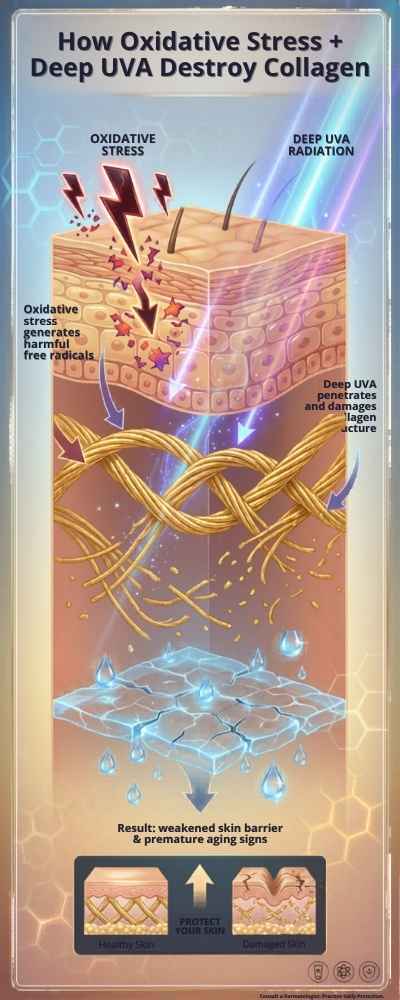
Beyond direct cellular damage, UV radiation generates a massive influx of free radicals within the skin. free radicals are highly unstable molecules that aggressively steal electrons from healthy cells. This microscopic theft causes a devastating chain reaction of cellular damage known as oxidative stress.
Oxidative stress is absolutely devastating to a bright complexion. It dulls the skin, weakens your local immune system, radically slows down cellular turnover, and creates a highly toxic environment where hyperpigmentation thrives. Your skin needs a powerful defense system to neutralize these erratic molecules, which brings us to the crucial role of glutathione in sun protection.
As the body's master antioxidant, glutathione is uniquely equipped to safely neutralize free radicals before they cause cellular damage. Using glutathione for dark spots is highly effective because it naturally encourages your tyrosinase enzyme to produce lighter, brighter pigment instead of darker pigment.
While glutathione is an absolute powerhouse ingredient, it is not a sunscreen filter. It works brilliantly from the inside out to repair damage, but you still need a broad-spectrum SPF on the outside to physically block the rays from entering.
How to Prevent Sun Spots Naturally
We firmly believe in healing, protecting, and brightening the skin organically. To truly address hyperpigmentation and combat long-term oxidative damage, you need a holistic, two-pronged daily routine:
- Defend Daily: Every morning, cleanse your skin and apply a high-quality broad-spectrum SPF of 30 or higher. Apply it generously to any exposed skin, and remember to reapply every two hours if outdoors. This is your non-negotiable daily shield.
- Repair and Brighten Nightly: Once your skin is thoroughly protected from new damage, treat the old. Incorporate organic, glutathione-infused serums into your evening routine. While you sleep, these potent botanicals neutralize lingering free radicals and naturally fade existing dark spots without harsh bleaching agents.
By pairing meticulous sun protection with organic brightening formulations, you fundamentally transform your skin's health and secure your glow for years to come.
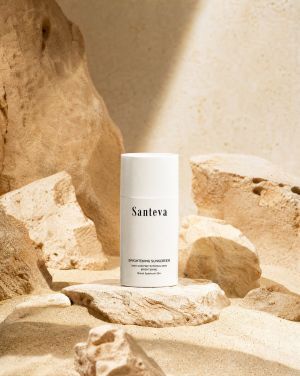
Brightening Sunscreen Broad Spectrum SPF 50+
Frequently Asked Questions (FAQs)
1. Will skipping sunscreen just once cause hyperpigmentation?
Missing a single day might not instantly cover your face in dark patches, but UV radiation damage is entirely cumulative. Even incidental exposure—like driving your car or sitting near a bright window—triggers your melanocytes to kickstart unwanted melanin production. Consistency is the absolute only reliable way to prevent hyperpigmentation from sun damage.
2. Do I still need sunscreen if I take glutathione supplements or serums?
Absolutely. The role of glutathione in sun protection is incredibly important, but its function is strictly internal. It acts as a master antioxidant that safely neutralizes free radicals and dramatically reduces internal oxidative stress. While using glutathione for dark spots brightens your complexion from the inside out, you still need a topical SPF shield to physically block the rays.
3. Can organic skincare reverse the negative effects of sun damage?
Yes! The best organic skincare for uneven tone utilizes powerful, naturally occurring antioxidants to gently fade sun-induced marks and deeply repair a compromised skin barrier. However, to effectively reverse the negative effects of not using sunscreen, these natural remedies must always be permanently paired with a daily broad-spectrum SPF so you aren't endlessly repairing ongoing damage.
4. What is the best routine to treat dark spots caused by no sunscreen?
If you are wondering exactly how to prevent sun spots naturally while simultaneously treating the ones you have, rely on a balanced two-step approach: daily defense and nightly repair. Every morning, apply a broad-spectrum SPF to completely halt further darkening. At night, apply organic, glutathione-rich serums to deeply target excess pigment and brighten beautifully while you rest.